
 JFAB
JFABJewelry design is an art that combines imagination and accuracy as designers use Computer-Aided Design (CAD) to make their ideas come true with unbelievable precision. If you are a jewelry lover or a designer yourself, or if you are part of a business looking for custom designs, it’s important to know how jewelry CAD designing works so that you can appreciate the skills behind popular ornaments. Let’s investigate the process of jewelry designing right from its conception stage to its finalized drawings.
1. Inspiration / Story
A piece of jewellery may be more than just an ornament; it may be telling a story behind it, expressing feelings or representing a culture in one way or another. Designers obtain their motivation from numerous sources—nature, past events, buildings, or even everyday experiences. For instance, one may create a flower ring that symbolizes blooming petals’ beauty, while another may design Art Deco-style bracelets that embody all geometrical concepts from the 1920s art movement. By this stage of development, designers are able to attach meaning to their creations, thus making them unique each time they do so.
2. Concept / Ideation
Every remarkable piece of jewelry begins with a concept. This stage involves brainstorming about the latest trends, client specifications, and personal artistic vision for designers. The aim is to produce something original but also practical at the same time. This is when considerations such as placement of gems, metal selection, and comfortability come into play. At this point, there can be conversations involving designers, clients, and artisans so as to sharpen the imagination before proceeding further.
3. Sketches
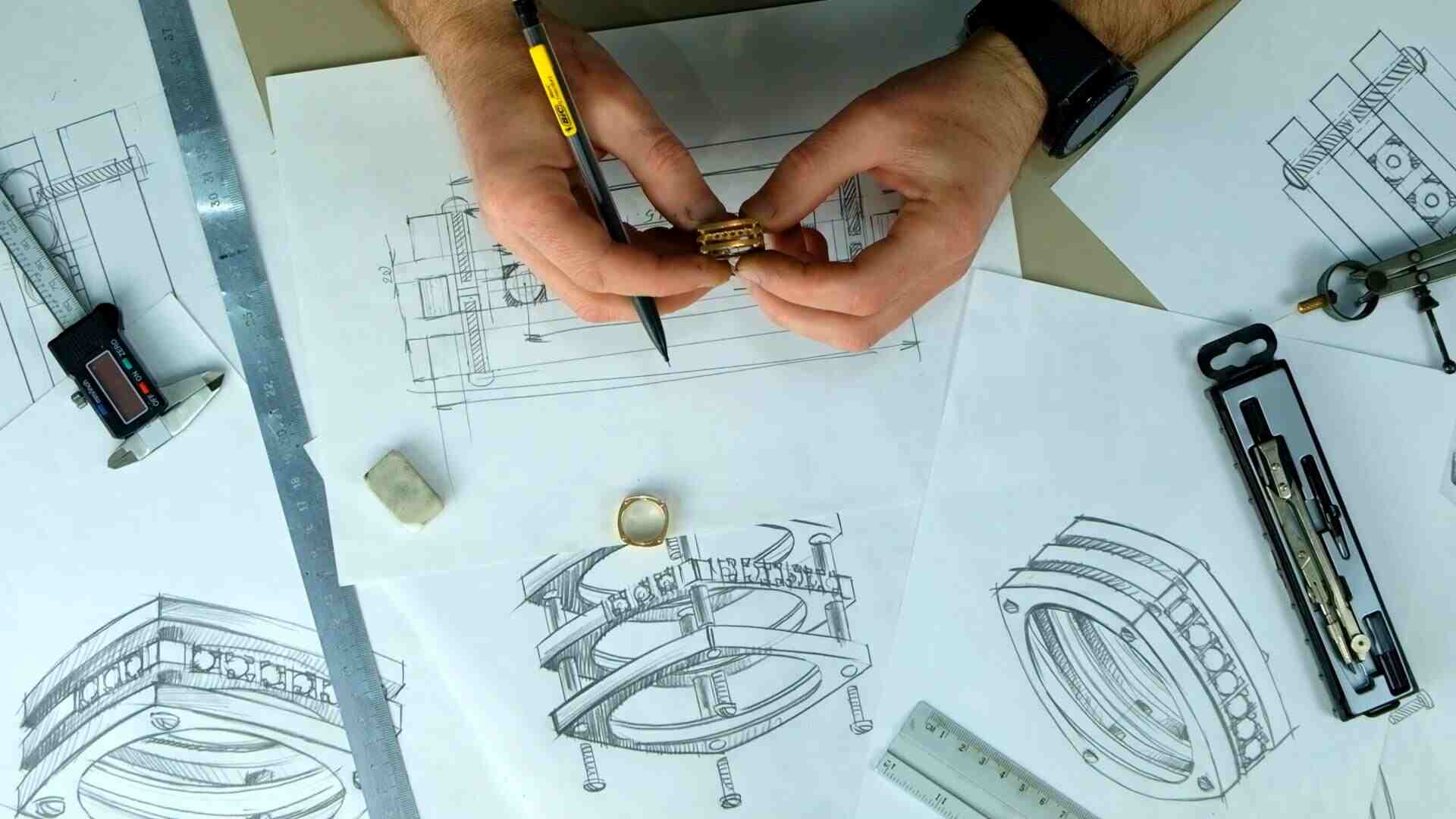
After settling on both concept and inspiration, the designer then creates mock-ups, which enable him/her to visualize how the design looks in detail. Rough draft sketches or digital outlines outlining weight distribution constitute this phase’s broadest description; therefore, CAD mock-ups let them create 3D forms with different proportions and preferences before making their final sketches. CAD mock-ups are extremely important since they allow for exact adjustments, thus making sure that the design is exactly what the client wanted and it is also technically feasible.
4. Final Drawing
The design is now ready for a final sketch after numerous reviews and adjustments. This last draft in jewelry CAD designing represents the object in much detail, with exact measurements, and is complex in nature. It contains details like setting stones, thickness of metal, and engraving designs, among others. The last image serves as a manufacturing basis, offering guidelines to artisans and jewelers on how to make the piece.